The Circle Will Be Unbroken
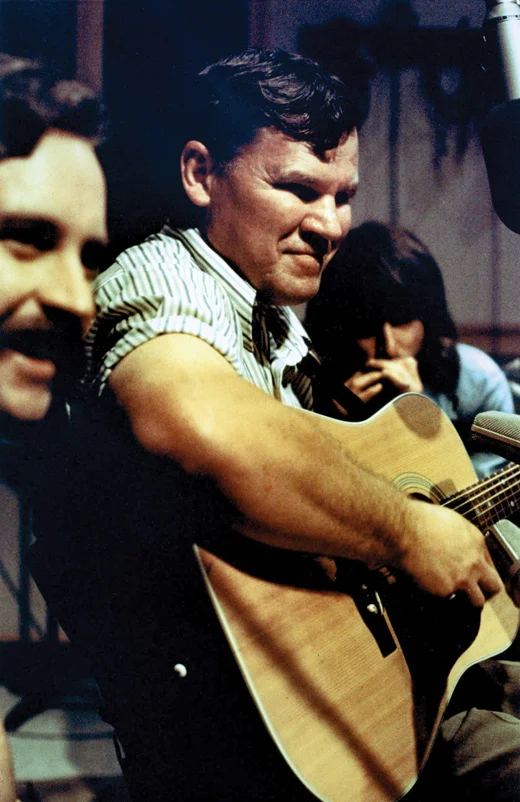
Guy Clark didn’t mince words when he sang, “I have seen the David/ I’ve seen the “Mona Lisa” too/ I have heard Doc Watson/ Play “Columbus Stockade Blues.” It might be decades before Watson’s legacy is completely unraveled, but the festival that he founded and steered into one of folk’s great commodities feels the impact of his loss right now.
Guy Clark didn’t mince words when he sang, “I have seen the David/ I’ve seen the “Mona Lisa” too/ I have heard Doc Watson/ Play “Columbus Stockade Blues.” It might be decades before Watson’s legacy is completely unraveled, but the festival that he founded and steered into one of folk’s great commodities feels the impact of his loss right now.
Doc Watson never claimed, nor even wanted, stardom. His relationship with his own celebrity, however, would at the same time be one of the biggest boondoggles in his life. For a man who would have been as satisfied with a career as a carpenter or electrician had his fortunes broken just a little differently, accepting the fact that he was one of the most important figures in American folk music was a dicey proposition when his foremost role in his own mind was as a provider to his family. How he went about it, maintains renowned luthier Wayne Henderson, one of Watson’s closest friends and owner of the Virginia guitar shop where he spent a great deal of time in his final years, ultimately made no difference to him.
But Doc Watson was as unlikely a star as there was, the owner of a 60-year performing and recording career that was at the vanguard of more than one folk music revival, a picker par excellence who was idolized among the worlds of old time, bluegrass, country, blues and all adjacent communities. That opposition between the Doc Watson who bore Paul Bunyan-esque stature as a cultural basin and the Doc Watson who was a humble, tractable family man who could also pick a blue streak was maybe never more eloquently depicted than in British ethnomusicologist AL Lloyd’s 1976 documentary, Three Days with Doc.
Arguably at the height of his world-traveling, Grammy-winning renown, it shows Watson and his band — which included his son Merle Watson and longtime bass accompanist T. Michael Coleman — sitting down to a Charlotte Coliseum audience of around 10,000, the whole room animated to the point of near bedlam. Then there was Doc, shushing them like an unruly 5-year old, gently scolding, after a few attempts to circumvent the escalating waves of noise, with an idle threat: “If you shout, we won’t pick. I mean that now,” he said demurely. “We appreciate the enthusiasm, but if you yell….” The next scenes, Doc picking in the living room of his Deep Gap home, were in breathtaking contrast.
“Doc never had any aspirations of being famous, he still always run that down as long as he lived. He was just fortunate to find out that he could do something to make a living. I’ve seen people fuss over him, what a legend and how great he was. He didn’t want to hear none of that stuff,” Henderson said from his Grayson County guitar shop. “More than anything else he wanted to be one of the people. That’s what he called it. You couldn’t help brag on him and be in awe of him, even some of us that knew him real well, but he’d fuss at you.”
The same would come of anyone who would place Doc as the focal point of MerleF- est; it is and will always be the Eddy Merle Watson Memorial Festival, not the Doc Watson Festival, he was known to remind (though, ironically, ask longtime Watson comrade and MerleFest staple Sam Bush and he will say that Merle, an intensely private individual, would be terrifically embarrassed by the attention). MerleFest Director Ted Hagaman noted that it had to be that way because MerleFest was Doc’s means of abiding a loss he would never completely overcome — not just the loss of a son, Doc’s longtime accompanist Jack Lawrence added, but of his best friend and someone who would add an entirely new dimension to his music as his recording career was taking off. Given the number of official and impromptu Doc Watson tributes that will occur at next weekend’s MerleFest 26, and likely for years to come, fussing over Doc will replace getting fussed at by Doc.
“Doc and I talked about the future of the festival several times over the past two or three years, and certainly, his wishes we want to continue to honor,” Hagaman said. “No. 1, he wanted it to continue to be a festival that honored his son, Merle, and of course that’s why the festival was started and far as Doc was concerned.”
Yet, MerleFest’s prosperity is owed largely to Doc’s presence; he exerted inexorable gravity on a world where the combination of authenticity, propriety and ability are prized above all else, and MerleFest is the rare festival where the influence of a single individual continues to serve as the compass for its curatorial vision. Moogfest, Asheville’s emergent electronic weekender that honors the influence of synth inventor Bob Moog (and which will return in 2014, ostensibly moving from Halloween into the same weekend as MerleFest), offers a paralleling concept in an entirely different musical arena, albeit MerleFest remains unique in that Moog’s influence was entirely post-obit.
The artists might be most affected by Doc’s absence, and also that of his wife Rosa Lee who passed in November. Jim Lauderdale described Doc’s comings and goings as being accompanied by a buzzing: “The kind of an excitement that the king had arrived. Because he was, he was a king to me,” Lauderdale said. Without Doc, MerleFest is left with a yawning maw at its core that those closest to him acknowledge cannot be replaced, even if his absence doesn’t preclude the possibility of continued creative growth given his extensive, often unfathomable repertoire.
“Doc was actually a very modern man,” Lawrence said during a recent phone interview. “People forget or don’t realize that, before he met [Smithsonian folklorist] Ralph Rinzler, he played electric guitar in rockabilly and dance bands, and played the hits of the day. He had to work hard to remember the old songs.”
Merle hired Lawrence two years before his accidental death primarily to handle road duties while Merle stayed back to work at the Watson family homestead, and what he noticed at that time was an act that was ever so subtly expanding the boundaries of the old-time and folk idioms. Doc had already begun to branch out considerably on record, not only in his choice of material, but how he would present old material. He reinvented the traditional “Walking Boss” for his landmark 1975 album Memories, a song originally given a rather cursory treatment more than a decade before alongside Clarence Ashley, with a hint of vibrato in his voice and made all the more meaner by Merle’s buzzy accompaniment. Not long after, Watson’s recreation of that piece would grow even more teeth on the debut LP by grunge pioneers the Meat Puppets and remain a staple of their live sets for the ensuing 30 years.
But regardless of how they cribbed Doc’s vociferous picking style into the early folds one of rock’s greatest sea changes, the idea of the Meat Puppets headlining the Doc & Merle Watson Theatre is comical given Doc’s other wishes, according to his meetings with Hagaman, which are to continue upholding the values and traditions for which the festival is famous. Achieving that end while keeping regulars happy and courting younger audiences is an ongoing chore for the festival, however unbecoming that reality of festivaleering might seem. Though bookings are coming more in line with tastes of teen and twentysomething audiences (this year’s Delta Rae acquisition give them one of folk’s most lucrative commercial crossovers), communicating the festival’s value to increasingly younger and more musically astute audiences has been and will always be a challenge. Scott Avett of the Avett Brothers remembers a time when he lacked an understanding of the sometimes equivocal qualities that define MerleFest.
“I was clueless to it. I think Seth and I were making our best effort to understand our perceptions of what old-time, or country blues, or country music were. I never understood why certain bands, like why did G-Love never play at MerleFest?” Avett said. “Why did Langhorne Slim never play at MerleFest? Why did Bon Iver never play at MerleFest? Those things were confusing to me because I never saw the genres of old time or country or bluegrass as being nostalgic only, and I think sometimes it’s still in jeopardy of being that.”
Avett is cautious to acknowledge it, but when he embraced the banjo as an East Carolina University undergrad — a decision made with a definite halo of irony amidst a crowd of rockers and punks — he and his brother were years ahead of a sweeping integration of mountain roots sounds into popular music.
“I think we are products of something that had changed and we all assumed that we were part of a revival that I personally thought was happening in 2003 when I met Regina Spektor, Langhorne Slim and Paleface,” he said.
In the past few years alone, the banjo has been a centerpiece in Taylor Swift’s colossal arena tours; it helped Mumford & Sons win a Grammy for Album of the Year this year; the Lumineers strummed it into what was the first of potentially numerous No. 1 singles; and even indie rapper Macklemore found a place for it on his breakthrough album The Heist, for the most part, all occurring after the Avett Brothers set a single-day MerleFest attendance record with their 2010 Sunday afternoon set. Avett remembers that winning the MerleFest crowd over, however, didn’t happen immediately.
“[In 2006] I remember being affected deeply by looking out in the crowd and expecting everyone to love it, But instead seeing not just a couple of people, a whole group of unrelated people getting up and clearly leaving as we were starting,” he said. “It’s interesting. I don’t know why we get to go back. I think we translate through all that. I think there’s a little space for what people will tolerate as far as change.”
If the festival itself sometimes seems to embrace changes in its programming at a snail’s pace, one only need to look to its educational outreach to understand that it is sowing their seeds years in advance. There’s a definite, if difficult path from learning the ways of the picker to achieving a booking, and it starts there. Wayne Henderson and Sam Bush are among many of its regular performers who take part in the festival’s in-school performance program, the flipside of which is the festival’s School Day, when thousands of Wilkes County students spend Friday morning at MerleFest. The ongoing Little Pickers Tent provides instruction and the chance to learn the art in a setting that all of the greats hone their skills, and the Chris Austin Songwriting Contest is renowned for launching the careers of unknown songwriters. That outside rivulets of musical influence are seeping into the flow ensures a progressive spirit exists within its inherent checks and balances.
There was no better example of that than Doc Watson himself, according to Jack Lawrence, who said Doc founded the festival under the banner of traditionalplus — “Meaning traditional, plus whatever the hell else I want to play,” he said.
Though there have been acts in the past that Doc would term a bit of a stretch, he was a lover of jazz, classical and rock, and it was usually Merle that was the catalyst in expanding his tastes. Lawrence remembers Doc and Merle riding down the road listening to the Allman Brothers Band — whether or not Doc wanted to at first, he noted — which Doc came to enjoy because Merle loved them. Even more of a stretch, there was also English art rock on constant rotation in the Watson household.
“Merle told me he wore out a copy of the Moody Blues’ Days of Future Passed on vinyl, played it till he couldn’t play it anymore. Michael Coleman and I always talked that we should play ‘Nights In White Satin,’ and Doc said, ‘Yeah, that would be a good one,’” Lawrence remembered. “Well, we never did, and then 10 or 15 years ago when it was just Doc and me on the road, I found that record was rereleased on CD, so I gave him a copy and said, ‘Here, try to wear this out.’
The next time we went on the road — and of course I had not done my homework — Doc said, ‘Next song is “Nights In White Satin” in A- minor.’ I’m thinking, ‘Oh God, I should have bought one of those for myself.’” Lawrence will be among the multitudes participating in MerleFest’s Saturday night tribute to Doc Watson — a jam that will include Jim Lauderdale, Peter Rowan, Jeff Little, T. Michael Coleman, members of Merle’s old band Frosty Morn, Jerry Douglas, John Cowan, potentially the Avett Brothers, should they arrive early enough, and a finale with the Nitty Gritty Dirt Band — which will assuredly enter the canon of highly anticipated tribute sets that includes Jack Hartford’s tribute and the My Friend Merle set. At the very least it’s the kind of tribute befitting a man — a star in his field — like Doc Watson. Just don’t let him hear you say that, or else he’ll fuss at you.
Memories of Doc
For a man who never once saw the world around him, Doc Watson’s recollections could be as vivid as watercolor. There was hardly a place he went, a song he sang or a person he met that didn’t have a story attached, but some of those people have their own stories about Doc.
Scott Avett, the Avett Brothers
It was always pretty amazing and beautiful when Seth was 13, we were getting to know who Doc Watson was. He invited Seth to his house while to sit down and play the piano for him. At that time, Seth was working really hard to learn songs. It was nothing but an older gentleman and a teenager spending time like a grandfather and a grandson, and Doc was simply excited about hearing these young singers exploring and discovering music. In a lot of ways, it set us up for what we were going to be doing. That’s an important time in a kid’s life music-wise. Most importantly, Doc may have stopped Seth from being a pop star. Thank God.
Sam Bush, mandolinist/fiddler
Growing up in Bowling Green, Ky., I used to play square dances and my dad was friends with a guitar player named Gib Cassidy. Gib was a blind man, and he taught me the way that he liked to be led, which was the same way that Doc liked to do it — holding onto your arm and being a half step behind you. That way if you do up a step, he would know. Doc, Merle, Michael and I were playing out at the Strawberry Music Festival out at Camp Mather in Yosemite Park one day. I was leading Doc back up on stage for the encore and clumsy me, I tripped and of course Doc almost went down with me. I was so embarrassed I said, “Doc, I’m so sorry, I’m so clumsy.” He said, “Oh Sam, you know I pushed you.”
There was another time in 1974 when we were touring with Frosty Morn. As we drove up through the Redwoods, there was one tree so big you could drive through it. We were inside one of the giant redwoods and the sound was so fascinating, I can’t remember what gospel song we sang but Doc started one up and we all started singing with him. Kind of makes me almost tear up to think about it.
Jack Lawrence, longtime Doc Watson accompanist
On my new CD, Arthel’s Guitar, I’m using this old Martin D-18 guitar that Doc gave me probably over 25 years ago. He had used it on a bunch of his old records in the ’60s and I grew up listening to this particular guitar on record and learned to play from it. I liked the way it sounded better than just about any guitar I ever heard him play, so I called it Arthel.
On the title cut, the notes just kind of came out of this guitar one day like they were hiding in there forever. I didn’t have to work hard to put the tune together. It just came to me all at once while I was playing this guitar one afternoon about 10 years ago. It’s amazing to me, looking back on my life at almost 60 years old, I was an 11-, 12-year-old kid listening to this guitar on record trying to figure out how to play, never thinking that at that point in my life I would spend 25 years working with Doc, let alone owning the guitar that he played on those old records.
John Cloyd Miller, Red June guitarist and Chris Austin Songwriting Contest finalist
The first Doc Watson album I ever had was Riding the Midnight Train. At the time, I was in college and was listening to a lot of jam bands and rock in addition to bluegrass. When I came across this Doc record, I was entranced. The warm, inviting sound of his voice and, of course, the always tasteful “just right” guitar playing. I ended up learning every song on the album, not because I was trying to, but because they just made their way into my brain. That’s how Doc’s music was — effortless sounding, stirring, yet very comfortable and familiar.
Riley Baugus, guitarist and luthier
On one of my visits to Doc and Rosa Lee, Doc and I were talking about our first guitars. I was telling him the story of how I had done what so many old time musicians had done and bought my first guitar from Sears-Roebuck. Well, I did just that. I saved my money, ordered the guitar and the day it came I played it way into the night until my fingers were so sore that I couldn’t touch the strings any longer. I was telling Doc about how high the string action was and how hard it was to press those strings on that cheap guitar. Remembering back when he was a young, new musician, with his typical wit and good humor, he said, “Son, I had one like that as my first guitar. The strings were so high it was like fretting a fence.” It was a great feeling to have Doc Watson telling me that he had learned on the same kind of awful guitar, but wanted to play so badly that he just kept suffering the pain to make it happen. That one comment from him continues to give me confidence when things are difficult. It might be like fretting a fence, but just keep on doing it anyway.
Amanda Platt, the Honeycutters
The first time I saw Doc Watson was at City Hall in New York City at a showcase for the Smithsonian Folkways. I was just there because my friend’s parents had something to do with putting it on. I was a skeptical teenager. I had grown up listening to country and roots music, but was determined to be a punk rocker. When it was time for Doc’s set he was helped out on stage and I remember thinking how bored I was going to be. Then when he started to play my jaw dropped and I was hooked, grinning from ear to ear the whole time and tapping my foot. I think that may have been the moment I realized it was okay for me to just give in and like this kind of music.
Jim Lauderdale, songwriter
I’ll remember just getting to talk to him more than anything. He really liked the record that I got to do with Ralph Stanley called Lost In the Lonesome Pines. It meant the world to me and it still kind of boggles my mind that he would listen to my music on a CD. I’d always give Rosa Lee one whenever I had a new one out, and I’d always try to visit with him at MerleFest. I didn’t want to tax him too much; I knew he had a lot of people to visit with. It really meant a lot to me just to sit and chat with him.
Wayne Henderson, luthier
I just made one guitar and one mandolin for Doc, but I would fix his Gallaghers because he was always knocking dings in them. The guitar I made him was a koa wood D-size with herringbone on it. And I think he was thinking of Rosa Lee maybe, of course he always was. It wouldn’t have made any difference to Doc what inlay was on it, but he asked me if I could inlay a rose on it. He said put a rose and some little hearts on it. I put a pickup in it for him to play it, and then I never saw it as much as I’d like to. I was having dinner with him while picking a guitar up to work on, so I asked him about it and Rosa Lee yelled at him and said, “You ain’t taking that one out and beatin’ it up, that’s my guitar.”
John McEuen, the Nitty Gritty Dirt Band
Doc’s Ticklin’ the Strings (Live at Newport Folk Festival) has inspired me since hearing it in 1964. After Earl Scruggs said, “Yes,” recording with the Nitty Gritty Dirt Band in June of 1971, I then had the nerve up to ask my guitar mentor the same question a week later — and he said yes!
At the “…Circle..” sessions Doc’s attitude of excitement was contagious. We were all excited to record with the actual guy we idolized since our west coast beginnings. Truly one of our landmark recordings thanks to him, Doc’s Tennessee Stud let us be in his world we had been emulating, and made us feel we were a part of “an old record.”
Doc’s humility, evident to all, was passed along to Merle, who helped paved the way for his dad to be on “Circle.” Though asked, Merle was adamant and said, “This is for dad.. I don’t need to play,” something we wish had happened to this day. We all thank Doc for his music and inspirations.
I will never forget when a festival promoter asked if he could go earlier than scheduled, Doc said, “Doesn’t matter to me what part of the team I’m hitched to, we’re all pullin’ the same load.”
Wired in Asheville: Moogfest Finds a Higher Purpose with Its Reboot
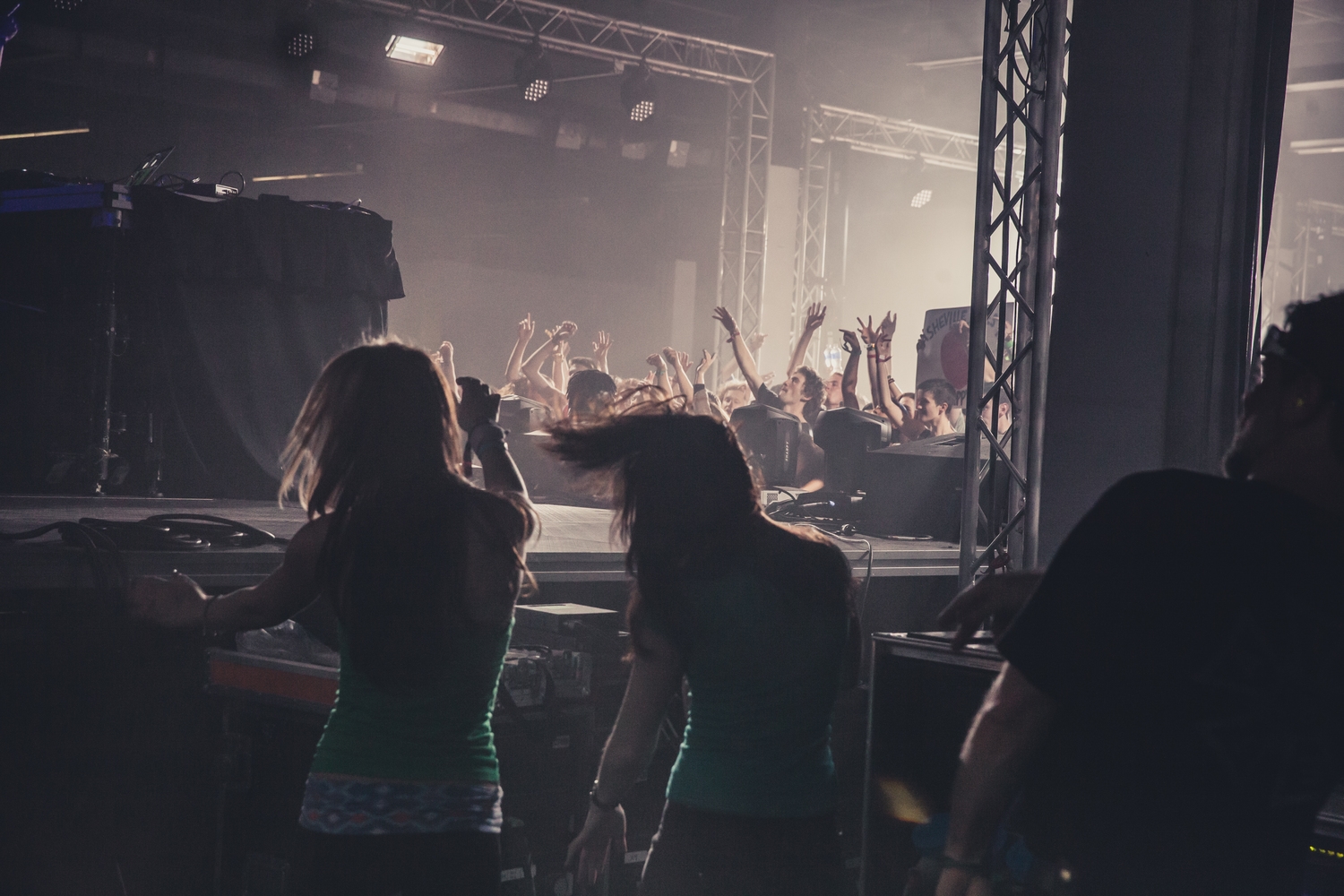
If the even saturation of music festivals over the last 10 years has engineered a “type” — the ravenous consumer of fun and experience who treats every four-day affair like a bear binging for winter — Moogfest was nourishment for the brain and the ears. From the monolithic, original modular Moog system that Keith Emerson brought to, ironically, one of the most organic sets of the weekend, to the ingenuously simple pitch-shifting and fully connectable recorders hand-built by Brand New Noise founder Richard Upchurch, technology was foremost to Moogfest’s locus. It keyed on applications for not just entertainment, of which there were copious amounts, but an Asimovian degree of utility.
The pie-in-the-sky optimisms of a Daft Punk performance at Moogfest turned out to be just that — despite ample amounts of bait — but there was hardly a moment wasted at the newly rebooted Asheville festival in honor of the celebrated inventor Bob Moog. Following its 18-month hiatus, the newest iteration of Moogfest ran a current between the scientific ingenuity that Moog instilled into his adopted home, the European genesis of electronic pop and the industriousness of the Detroit scene that worked to explode it. The result was fusion of the stunningly futuristic and the deliciously retro, a mecca for tech geeks, EDM fanatics and the creatively obsessed alike.
If the even saturation of music festivals over the last 10 years has engineered a “type” — the ravenous consumer of fun and experience who treats every four-day affair like a bear binging for winter — Moogfest was nourishment for the brain and the ears. From the monolithic, original modular Moog system that Keith Emerson brought to, ironically, one of the most organic sets of the weekend, to the ingenuously simple pitch-shifting and fully connectable recorders hand-built by Brand New Noise founder Richard Upchurch, technology was foremost to Moogfest’s locus. It keyed on applications for not just entertainment, of which there were copious amounts, but an Asimovian degree of utility.
Those with the discipline to rise at 10 a.m. following Soul Clap and friends’ masterful DJ set in the newly-christened US Cellular Center basement — immediately dubbed the “Rave Cave” — could have witnessed an engrossing dialogue by Oxford philosopher Nick Bostrom on fast approaching realization of super-intelligent machines. Shortly after, one could access and field-test Conductar, an app that played music from brainwaves channeled from the user to their iPhone via earbuds and sensors, while also rendering their location virtually.
Other daytime talks delved into human connections to technology on a profoundly more personal level. Neil Harbisson was born color-blind before having a electronic protuberance implanted into his skull that allowed him to instead perceive colors as sounds and in the process, made him the first internationally recognized cyborg. It was more a bit of gawk-worthy curio than a real enlightenment, but the latter didn’t necessarily always come from the festival’s in-house academics.
R&B star Janelle Monae made a Thursday appearance with her production partners Chuck Lightning and Nate Rocket Wonder (though didn’t perform) to discuss the nature of inspiration, using her Electric Lady creative persona as the jump-off. Her interview, conducted by YACHT frontwoman and noted science blogger Claire Evans, touched on their imminently relatable obsession with sci-fi, utilizing your community as a transmitter for ideas, and Monae’s perception of the First Lady as the original Electric Lady.
While its daylight offerings carved a fascinating niche, Moogfest likewise took a progressive, highly individualistic path with its music festival duties. In-the-moment acts making the summer festival rounds this year were almost entirely absent, but that was by design. Detroit promoter Paxahau brought a heavy contingent of acts from the Motor City and Chicago, the two cities most widely associated with the birth of contemporary dance music, and thus, night programming brought a heavy dose of DJs and producers representing a broad sonic spectrum, or bands who thoughtfully engage technology.
Wednesday’s evening slate was truncated as an opener, but brimming with quality nonetheless. Synth-pop legends the Pet Shop Boys brought the first, but easily among the strongest, of the festival’s countless spectacular visual installations. Neil Tennant and Chris Lowe entered the Thomas Wolfe dressed as walking magnetic filaments, while asexual dancers in bulls’ headed twirled behind them in from of a massive projection screen. As striking as it was, it felt like a mild preamble to Brainfeeder head Flying Lotus’s assaultive display.
He took the Orange Peel stage, the line outside stretching far down the block, and offered that he had “…no f---cking clue was [he] was going to do…” that night, and with a draconian no-camera policy in force, he unloaded a symphony of brutality. His twin projection screens, one in front and one in back, created a paradox of inertia and rapid movement amidst singeing flashes and bass so heavy he blew out a speaker midway through. His set introduced a handful of new songs, along with its accompanying live production, from his forthcoming album. On one, he offered a tremendous tease by insisting his audience guess the owner of a brief vocal sample he dropped. He didn’t play enough for it to register, but amidst the sonic chaos into which he introduced it, it very well could have been Beyonce or Kelis.
He ended his set with a guest spot from Thundercat (whom he assisted earlier in the day with DJ duties atop the Aloft Hotel at the opening VIP party with Gov. Pat McCrory in attendance) on “Oh Sheit It’s the X” though somewhat disappointingly, it was the highest profile guest spot of the weekend, though it wasn’t the only surprise. There were no rumored secret sets by Thundercat or Monae, and especially not by Daft Punk, but Ernest Greene, better known as chillwave producer Washed Out, did give an unscheduled performance at the Masonic Temple. Though it was at capacity, it faced stiff competition from the highly anticipated performance by Nile Rodgers with Chic. Rodgers had earlier given one of the weekend’s best talks, in which he mused on the secret jazz chords couched in his imitable sound and creating a presence in the music industry through your story.
He sat on the lip of the Thomas Wolfe Stage for half and hour rapping with fans before retreating backstage long enough for the house lights to drop. With a setlist that included Madonna’s “Like A Virgin”, David Bowie’s “Let’s Dance” and Duran Duran’s “Notorious”, Rodgers cautioned midway through that he wasn’t fronting a cover band; he actually wrote and/or produced all of the songs that he and his band performed. At almost the same time, a Columbia, S.C. artist who’s a tangential successor to Rodgers was testing out unreleased music at the Asheville Music Hall under a relatively unknown pseudonym, Les Sins. Just a few weeks before, Toro Y Moi’s Chaz Bundick had been on stage at Coachella singing with Chromeo, but Saturday night he looked focused and observant, carefully selecting new disco-hued tracks and assessing his audience’s reaction.
Like Bundick’s capacity for observation, there were learning opportunities among the evening and night sets as well. Cult Los Angeles electro producer the Egyptian Lover cradled his Roland TR-808 while his hype man gave his crowd lessons in sonic recognition while the suitcase-sized box rattled the apartment windows all around the Moog factory. German electronic pioneers Kraftwerk were the festival’s top draw with three performances of their lauded 3D installation, but even they reportedly took away lessons from their time at Moogfest. After their Thursday night performance bombed out halfway through due to catastrophic sound failures, rumors abounded through the production staff that it was due to their equipment carrying incompatible European inputs and in a rush to acquire the proper adapters, mistakes were made. All was right with the ship Friday night, which literally (or virtually) landed just outside the Thomas Wolfe during “Spacelab”.
With so many originators and innovators on hand, part of the fun was parsing their influences via the samples they incorporated. Weirdo electronic composer Daedalus took his Orange Peel audience through a madman’s symphony of dark hip-hop beats before showing them the light at the end of the tunnel with a well-placed sample of Roy Ayers Ubiquity’s “Everybody Loves the Sunshine”, while afterwards, the Gaslamp Killer toasted his Brainfeeder mate Thundercat — and by default, his deceased labelmate Austin Peralta — with a moody twist on “A Message for Austin”. Maybe the bravest, and most pointed, Easter egg all weekend, however, was Mad Decent wunderkind Dillon Francis dropping in the robotnik countdown from Kraftwerk’s “Numbers” to the remnants of RiFF RaFF’s audience.
Before Francis made that clever reference came easily one of the most packed sets at the cavernous Rave Cave all weekend, though it would have also been difficult to find a bigger waste of time at Moogfest. RiFF RaFF was 15 minutes late to his set, when he did arrive, he very well would have sang the chorus to his opening song interminably had his DJ finally not changed the track. All the Mad Decent artists on deck did on Saturday was pack rooms, however, and rapper M.I.A.’s closing set at the Thomas Wolfe took home the trophy for the rowdiest by several orders of magnitude. In a room where Tom Waits and Leonard Cohen have wowed sold-out rooms, Maya Arulpragasam’s simple set was like an incontrovertible mathematical proof on how to turn a room upside down.
But a lot of people just came to Moogfest to dance. Detroit techno legend Green Velvet has made a respected, but understated career out of that very notion. Most well known as the creator of “Coffee Pot (It’s Time for the Percolator)” under his Cajmere moniker, Curtis Jones’ Green Velvet persona -- complete with lime green mohawk and steampunk shades -- practically mind-melded with a 4/4 beat. His three-hour set was unrelenting and purifying, full of weird vocal overtures and incredibly catchy hooks, but never wavered from that baseline. When it came time for the percolator, it wasn’t some groan-inducing bar DJ, it was the Chicago originator and it was incredible.
If one of the great assumptions of music-making is that automation would do to the singer-songwriter pouring out their heart with an acoustic guitar what it did to the craftsman forming each creation by hand, then the pithiest counter argument were those songwriters augmenting their works via technology. A pair of stunning performances at the Emerald Lounge to close out Saturday night were a testament to the power inherent in electronic music when wielded by real talent. Asheville producer Marley Carroll showed off the turntable skills that won him DJ titles at age 16, but that was only a part of the package. His gorgeous 2013 album Sings was at center of a set in which he unwrapped a outstanding voice along with Baroque musicality.
He said beforehand that he felt intense pressure opening for fellow North Carolinian Travis Stewart, who was following with an exploded presentation of his Machinedrum album Vapor City. “Exploded” might have been somewhat of an understatement. With the news of the passing of one of Stewart’s greatest influences, Footwork pioneer DJ Rashad, just an hour old, Stewart gave arguably the best performance of Moogfest. While Lane Barrington was the real machine drum, recreating Stewart’s granular drum patterns on the kit next to him, Stewart was a solo electronic orchestra, fashioning the album’s raw sensuality from his hypnotic guitar playing and plaintive vocals. While one minute he was a one-man Slowdive, the next he was laying out virtuosic MPC beats. Cearly spent amidst the 80-degree, capped-out Emerald Lounge he finished with Vapor City and offered up an improvised mix of DJ Rashad’s “Pass That Shit”, tears streaming down his face.
For all the goodwill and awareness that the first iterations of Asheville’s Moogfest engendered for the marque that forms its namesake, there was an irrefutable degree of hesitancy surrounding its overhaul between 2012 and this past week. The vision enacted by Moog Music’s 2010–2012 partnership with festy giant AC Entertainment was one of broad entertainment first and pedagogical outreach second, emulsified by the yolk of populism and designed to appeal to an auxiliary segment of the audience for AC’s flagship festival, Bonnaroo.
Moog’s alignment with Paxahau to rebrand the festival brought that entirely new identity it sought, but its 18-month transition elicited a degree of frustration in those who become comfortable with the predictability and security of the old guard. There was drama surrounding McCrory’s invitation, there were a couple of high profile artist cancellations at critical moments, and a schedule for the five-day affair that didn’t materialize until two weeks prior. Impatience abounded in online forums and social media over the future of a festival that was to be the nexus of art and science for not just North Carolina, but the Southeast. Yet, like the unmistakable tones of the Moog synthesizer itself, the reward for uncertainty is a lot of genius.
Piedmont-Bred Voyager's Homecoming Promises A Worldly Experience
Vapor City, the 2013 release by the Eden, N.C.-born, Hickory-raised sonic and world traveler Travis Stewart under his Machinedrum alias, is a high-touch, high-concept excursion though an illusory gray dystopia where its sweeping palette of sound reveals a sterile, Fforde-ian warmth in those able to perceive it. Go back far enough into Stewart’s Machinedrum discography (just one of many handles under which he records), and one can hear hints of its ultramodern union of slinky R&B, rapacious Jungle beats, litany of freelance influence and raw abstraction on his Merck releases from when calling something “intelligent dance music” wouldn’t be dismissed as a brand of conceit.
Vapor City, the 2013 release by the Eden, N.C.-born, Hickory-raised sonic and world traveler Travis Stewart under his Machinedrum alias, is a high-touch, high-concept excursion though an illusory gray dystopia where its sweeping palette of sound reveals a sterile, Fforde-ian warmth in those able to perceive it. Go back far enough into Stewart’s Machinedrum discography (just one of many handles under which he records), and one can hear hints of its ultramodern union of slinky R&B, rapacious Jungle beats, litany of freelance influence and raw abstraction on his Merck releases from when calling something “intelligent dance music” wouldn’t be dismissed as a brand of conceit.
Go back even further, and you have a precocious kid in Walkertown, and Hickory soon after, experimenting with the drum machine his country music-playing grandfather used to keep time in practice, or recording jokey songs on his tape machine. His keen interest and acumen for music was recognized early, and soon Stewart had any instrument he wanted in his hands. That included his parent’s baby grand and harmonicas, the guitars belonging to his “Pops”, or just listening to his songwriting cousin (and major early influence) play hers. That naturally expanded into electronic when he discovered artists like Autechre via MTV, one of the only available methods of introduction in the tiny Piedmont towns he called home, and his worldwide wanderlust was a byproduct of that geographic locus.
“I discovered so many bands by watching shows like ‘120 minutes’ and ‘Headbangers Ball’, but it was through the show ‘AMP’ that things really started taking off for me influentially,” Stewart said. “I also spent a lot of time on the internet seeking out music, art, movies and other things that interested me since I had no real outlet for those things in Hickory. I met a lot of people who lived all over the world and I think that gave me some perspective at first, maybe lit a fire that made me want to go other places.”
Stewart noted in a recent interview that he never took any traditional music lessons due to his stubbornness, and it’s a trait that keen listeners might detect on his most recent recordings like Vapor City, its widely acclaimed predecessorRoom(s), or his sterling production on futuristic soul crooner Jesse Boykins III’s just-released record, Love Apparatus. He’s known as one who rarely takes shortcuts in creating a track, programming each individual beat on Love Apparatus rather than duplicating sounds, and turning his own vocals and guitar playing into complex, ghostly texture. The level of detail that Stewart put into his Vapor City release and its companion EPs,Fenix District and Vapor Park, present an imagined city where tactile and spatial boundaries exist in the form of stylistic constraints. The 10 tracks on Vapor City each represent their own district within the city, and each sound is a detail unto itself that lends that district its defining qualities.
“There was a common sonic connective thread between all of the songs that might not be apparent to others when listening. These pairings reminded me of how a city can be made up of very dynamically different areas or districts, but still remain part of the same unit,” Stewart said. “For example, when you are in China Town or Prospect Park you know you are in New York City, even though those two areas are completely different from each other.”
On Saturday night at Moogfest, he’s giving it one of its most involved treatments yet. As surreal as he says it feels to be coming back to North Carolina for such an important show — he recently moved to New York City from Berlin, and remains abroad more often than not — Stewart has big ideas on how to give his home state a proper presentation. He’s been working with visual artist Weirdcore, who previously created a chromatic blitzkrieg for electronic luminary Richard D. James’ live shows, to map out the wildly diverse architecture of Vapor City to build a geodesic, if intangible representation of Vapor City to accompany a full live performance of the album. The complete realization of this project is a journey through the city, conceptualized through a shared DropBox folder where Stewart would post images and videos of the ideas in his head, and Weirdcore would fire back with his own interpretation.
“I gave a general description of each district as well but I left it vague enough to allow Weirdcore to have his own interpretation,” Stewart said. “I worked in a similar fashion with Clair Stirling the illustrator and Dominic Flannigan the graphic designer for the album artwork. It was really cool to see these incredible artists have their own take on my dream city, and in some ways it was spot on accurate to my vision and in others it was interesting and beautiful twists on my original ideas.”
Moogfest attendees will have absorbed three days of electronic music workshops, future-philosophical discussions, and live demonstrations, so it will be an unusually enlightened audience absorbing a work that Stewart says receives multiple returnees to his live performance. He’ll also have a hand from drummer Lane Barrington, formerly of Portland folk experimentalists Hosannas.
“It allows people to see the musicianship that went in to creating the album; people that might not understand the intricacies involved have a different kind of connection with the music,” Stewart said.
Preservation Hall Jazz Band Evolves, Slowly
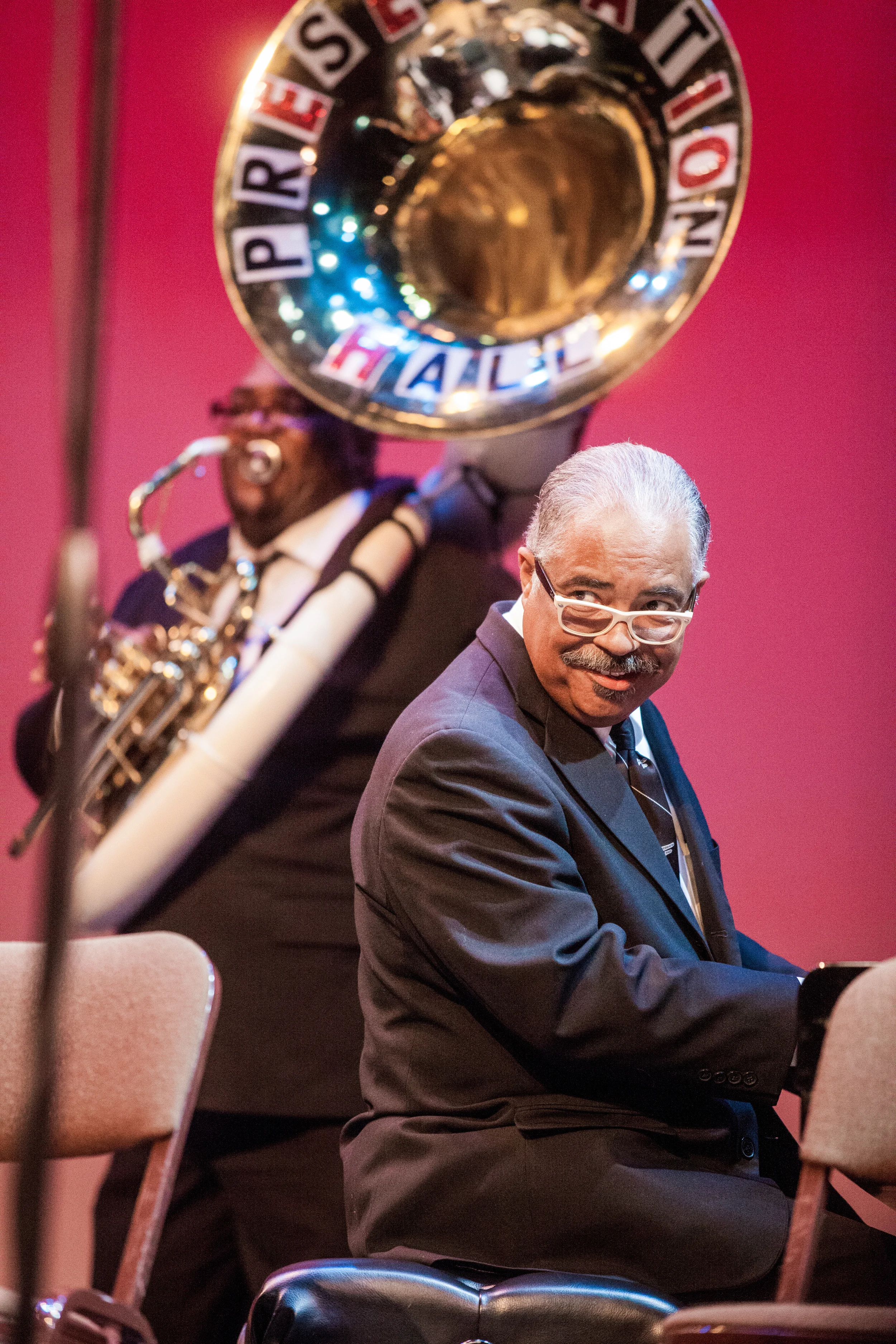
There’s a sign on the wall inside of New Orleans’ Preservation Hall that announces the customary request fee for its illustrious house band to play songs from the sprawling NOLA songbook: $5 for traditionals, $10 for others, and $20 for “When the Saints Go Marching In.” There’s never been an explicitly assigned fee for Preservation Hall Jazz Band’s original works, but that’s because when founder Allan Jaffe put the sign up to deter tourists from requesting the only song most of them typically knew by name, there has never been an album of PHJB originals. That changed last summer, when PHJB released That’s It!, a record of all original compositions created under the guidance of current Preservation Hall director and bassist Ben Jaffe, and produced by PHJB ally Jim James, front man of My Morning Jacket.
There’s a sign on the wall inside of New Orleans’ Preservation Hall that announces the customary request fee for its illustrious house band to play songs from the sprawling NOLA songbook: $5 for traditionals, $10 for others, and $20 for “When the Saints Go Marching In.” There’s never been an explicitly assigned fee for Preservation Hall Jazz Band’s original works, but that’s because when founder Allan Jaffe put the sign up to deter tourists from requesting the only song most of them typically knew by name, there has never been an album of PHJB originals. That changed last summer, when PHJB released That’s It!, a record of all original compositions created under the guidance of current Preservation Hall director and bassist Ben Jaffe, and produced by PHJB ally Jim James, front man of My Morning Jacket.
The crux of That’s It! is that it sounds like it could very easily belong to the very canon of early jazz that Preservation Hall sought to preserve and promote when it was founded in 1961. Its title track is a torrid processional perfectly fit for tramping up Magazine Street, and “Rattlin’ Bones” is a tumbledown rag that reveres the macabre bedrock of holiday saturnalia. Jaffe doesn’t doubt that the idea of creating an original work ever occurred to his father in the near-quarter century that he shaped and guided the Hall’s mission, but ultimately there wasn’t a place for it within that mission. There was already too much unheard material to work with and too many unacknowledged musicians that needed to be heard outside of the city.
“When my father started the Hall, one of the amazing things about being alive then was that you could literally go see the originators of jazz. You could go see Big Jim Robinson, you could see George Lewis, you could see Punch Miller,” Jaffe said in a recent interview. “These were musicians who were alive during the birth of jazz, were part of its creation. When you have a 96-year-old bass player in your band, that is what he knows.”
Today, none of those originators are still living. Even 102-year-old Lionel Ferbos is still considered Second Wave. With Preservation Hall’s 50 th anniversary arriving last summer, there was an organic opportunity to evolve the mission beyond finding new ways to expertly interpret the canon. Jaffe credits James, who brought the Preservation Hall Jazz Band on tour with My Morning Jacket in 2010 and occasionally pops up in their live shows when the opportunity presents itself, with pushing them to create That’s It!
“For me having Jim’s perspective was enormous. It’s why people go to therapy. To have someone who understands your creativity, and he’s not afraid to explore that side of himself,” Jaffe added.
It might not have taken much goading, however. Preservation Hall had already primed itself to expand boundaries by hosting the Brassft Punk parties, an acoustic music tribute of dance music innovators Daft Punk by the house’s sound engineer Earl Scioneaux III. Shortly after the release of That’s It!, it would host another of Scioneaux’s parties, the release of his Madd Wikkid project’s mixtape, Don’t Tell Nobody. The scene inside was not something you’d expect inside Preservation Hall: Macbooks, mixers, solid dance beats, and samples of Mystikal and Lil Wayne set to Ernie K- Doe and Dr. John. These rare diversions are just that, even if they are becoming more common, but Jaffe understands that the songbook of New Orleans with which Preservation Hall is charged with caretaking reads in a descriptivist language, not a prescriptivist one.
“Even though our philosophy has remained the same, the mission has evolved. When you’re building a place that reflects the living history of New Orleans, as that history evolves you evolve,” Jaffe said. “I think youth culture is very important, you know. I mean, jazz grew out of youth culture. I have a daughter and I’m sure I’m not going to understand the music she’s listening to 10 years from now. That doesn’t take anything away from it or make it less valuable. In fact I think it makes it more valuable because that’s the future.”
He suggests it’s not entirely farfetched to believe that the Preservation Hall Jazz Band could be conjuring up instrumentals or Mystikal or Lil Wayne tracks when his daughter is at the Hall’s helm decades from now. The tropes that define traditional jazz are already deeply intertwined with the influences of the city’s most current musical progeny — Trombone Shorty, Kermit Ruffins, the Stooges Brass Band, etc. They’re an organization who committed themselves long ago to preserving the music that defines the city, in whatever shape it arrives. One thing won’t change, however — “Bouncing Back” might cost $10 to hear in 2054, but “Saints” will still cost you $20.
N.C.'s Best Releases of 2013
25. CIVILIZED
JEWS & CATHOLICS
Don’t be fooled by the title of Jews & Catholics’ Civilized. The unholy combo of Eddie Garcia’s ravenous riffs and Alanna Meltzer’s classical iconoclasm on upright bass are anything but. Like the weather, if you don’t like it, just wait a few. Stabbing, abrasive Dino Jr. Jr.-style rock becomes gurgling doom metal on a whim, and twisted jangle finds empathy alongside dreamy shoegaze.
24. SOUL ON FIRE
ETHERNADASSASSIN
You won’t find a single feature through the first 11 tracks of rapper ethemadassassin’s streetwise third LP, Soul On Fire. It’s a lonely road he walks, and at times it feels like he’s overcome by the swirling orchestral instrumentals, but there are occasions where he asserts himself as being among the sharpest of underground emcees.
25. CIVILIZED
JEWS & CATHOLICS
Don’t be fooled by the title of Jews & Catholics’ Civilized. The unholy combo of Eddie Garcia’s ravenous riffs and Alanna Meltzer’s classical iconoclasm on upright bass are anything but. Like the weather, if you don’t like it, just wait a few. Stabbing, abrasive Dino Jr. Jr.-style rock becomes gurgling doom metal on a whim, and twisted jangle finds empathy alongside dreamy shoegaze.
24. SOUL ON FIRE
ETHERNADASSASSIN
You won’t find a single feature through the first 11 tracks of rapper ethemadassassin’s streetwise third LP, Soul On Fire. It’s a lonely road he walks, and at times it feels like he’s overcome by the swirling orchestral instrumentals, but there are occasions where he asserts himself as being among the sharpest of underground emcees.
23. COLORADO
UNIFIER
Aslan Freeman is no stranger to change. After bouncing from project to project for a few years, quietly honing his pop-rock chops, he finally settles into the project that could become “the one” in Future Ghosts. Change wasn’t done with him, as the band was hit with a cease-and-desist order over use of its name, the Greensboro band called Future Ghosts became Unifier and their debut album Colorado is a monument to the kind of non-pandering, assertively accessible pop that practically began and ended with Jimmy Eat World. Freeman’s lyrics challenge, his riffs are choppy and bright, the toms and hats want to bust eardrums, and while there’s really not a standout track, it makes for inspiring sonic scenery.
22. EP
THE BRAND NEW LIFE
The Brand New Life’s last offering before leaving Greensboro for the greener musical pastures of New York City is also a bold departure from the Afrobeat fusion on which they built their name. It does, however, present the Brand New Life at its playful, mischievous best. Its four tracks utilize tricky time signatures meant to fly past all but the most astute listeners, mixed in with conventional four-on-the-floor beats. That it was nearly two years in the making was a far cry from the breakneck two days of live tracking spent on their seven-song 2010 debut.
21. DARK HOLLER POP
MIPSO
You have to admire songwriters who are willing to venture outside their immediate area of expertise to cull a turn of phrase that could either elevate an entire song, or cause it to fall apart upon examination. When Joseph Terrell of Mipso sings “sign me up for experimental laparoscopic cardiology” on the heartbreaker “Red Eye to Raleigh,” no one cares that he’s not singing about an actual medical procedure, least of all the cardiologist-turned-label owner that made a gem of crossover bluegrass and whip-smart folk-pop like Dark Holler Poppossible.
20. MERMAIDS
MICHAEL RANK & STAG
There’s a difficult choice to be made between Michael Rank’s two excellent 2013 LPs. Ultimately, it would reflect your preference between the Rolling Stone’s Beggars Banquet and Sticky Fingers. Rank and Stag’s comparisons to the Stones are earned: he makes gritty, passionate country rock with gravelly vocals and reckless, bluesy guitar abandon. His October release, Mermaids, find kinship in the former with its more measured execution and lavish arrangements. After the post-divorce exercise in emotional release on February’s In the Weeds, Rank is evolving in the opposite direction, and on Mermaids his damaged growl finds a new home amidst an ace collection of players like John Teer and Emilie Frantz.
19. ANTI-AMERICANA: SPEAKING TO THE UNCON- SCIOUS MIND OF THE SOUTHWEST
AMERIGLOW
A few years ago, Israel Darling’s Jacob Darden committed a classic rock gaffe: Fed up with making music, he hocked nearly all of his instruments and amps, swearing off songwriting for the less complicated life of chasing a girl around the Northeast. Predictably, the itch for songwriting returned, and Darden flayed away the Biblical complexities and knotty arrangements of his most notable work down to the simplified garage-country found onAnti-Americana, the debut EP of Ameriglow.
18. METRICS OF AFFECTION
BOMBADIL
Durham chamber-folk quartet Bombadil were strangely silent following their pretty good 2011 record All That the Rain Promises, but their quirky Ramseur Records release, Metrics of Affection, was worth the wait. It fell on the opposite end of the color spectrum from the darker previous record, but its most noteworthy accomplishment was as a spectacular piece to their ostentatious live shows.
17. LOVE IN FLYING COLORS
THE FOREIGN EXCHANGE
It was hard to stand out in a year in which artists like Autre Ne Veut and Blood Orange took grown and sexy sounds into the next millennium, and as such Phonte Coleman and Nicolay’s fourth album more or less maintained a holding pattern from 2010’s Authenticity. Their brand of R&B remains inherently good for your soul, and Love In Flying Colors is like chicken soup in that regard.
16. NATIVE AIR
LOWLAND HUM
As tempting as it might be to say that newlyweds Daniel Levi and Lauren Goans make sweet music on their debut album as Lowland Hum, it would be the kind of egregious clich that’s beneath Native Air. It is indeed one of the sweetest, most intimately penned records to come out of North Carolina this year; between their tranquil harmonies and Daniel Levi’s uncanny melodic sensibilities, it moves as impulsively as a new-fallen leaf on an autumn breeze from top to bottom.
15. LOVE & BARBITUATES
E. NORMUS TRIO
The award for oddest arrangement of the year goes to Asheville jazz futurists E. Normus Trio, whose Love & Barbiturates explores the unlikely (or maybe likely) kinship between its two titular concepts via bass clarinet and N/S Stick. Jay Sanders is a force on the eight-stringed N/S, conflating the guitar and bass parts at once against the torrential rhythms of Michael Davis. At its center is Steve Alford, whose melodic ideas are more in line with Dolphy than a traditional clarinetist like Goodman. Together, they’re one of the state’s most interesting fusion combos, and Love & Barbiturates is an exciting manifesto on the future of Tar Heel jazz.
14. SAMANTHA’S VACATION/POSTCARDS FROM MSSR PERDU
SAMANTHA VACATION
One part acid-splashed techno and one part druggy cosmic missive, the debut release by Chapel Hill producer Daryl Seaver under the name Samantha Vacation is the latest territorial expansion by the rigidly DIY Long Island Electrical Systems (LIES) label. If there’s a groove in this glorious mess of neon kicks and ghostly vocals cut on discernibly crappy gear, it’s always one step ahead of you.
13. SHARP OBJECTS
OMNISCIENCE
The reappearance of Bear Creek emcee Omniscience from the ether is one of the more improbable occurrences in hip-hop this year, but the one-time major label castoff found believers in Milwaukee beat miners Dope Folks Records. A steady stream of prime wax that began with the reissue of his once-lost ’93 release The Funky Oneliner, a prized relic of Greensboro’s superb rap past, opened the door to more sold-out reissues and recently opened the door for new, independent material. Sharp Objects shows that the old dog can still bark, spitting lines like “Fuck a spoon, I’m a show you how to eat with a pen” in his grainy flow against Debonair P’s meaty boom-bap.
12. WELCOME TO REIDSVILLE
YOUNG DIRT
American Aquarium’s BJ Barham sings an eponymous ode to his Reidsville home that paints it as a drowsy small town whose denizens are more concerned with Ford vs. Chevy, and everyone is “too much in love to give a god damn.” From the perspective of rapper Young Dirt on his debut mixtape Welcome to Reidsville, that same Small Town, USA is trapped-out hustler’s utopia, and he’s got his flow tight enough to rise above it while still repping it (he’s sure to distinguish the Tre Fo from his city in the opening bit). Refer also to the tape’s best track, buoyed by an incredible finger-picked guitar sample, the Robb County-produced “Country Boy”: “Passport, laptop, headphones, I’m trippin’ like whose life is this?/ Who’da thought west-end Reidsville be overseas on this business trip?” Awesome.
11. OUR OWN MASTERS
VALIENT THORR
Valient Thorr take an axe to gross consumer culture immediately on Our Own Masters, their first LP in three years, with the razor-sharp “Immaculate Consumption.” It’s a jagged, relentless assault that recalls the best of Thin Lizzy or Pentagram at high RPM, and if it’s a departure from the legend building of the Chapel Hill metal warriors’ first decade, it’s because they’re now imposing their agenda on the legions of Thorrians they’ve accrued over six albums of ball-breaking metal. There is a closing moment of fealty to a greater power, however. Between the hook “My body aches for dry land” and the direct lift of the riff from Queens of the Stone Age’s “No One Knows,” “Call Off the Dogs” plays like a plea for a Kyuss reunion.
10. SEASON OF 1000 COLORS
ESTRANGERS
Few bands have demonstrated the kind of concerted growth in the past two years that Winston-Salem’s Estrangers have. The dreamy summer psychedelia on their 2012 EP Sunmelt might as well have been a different band from their patchy, introverted 2011 debut Black Ballroom (and in some ways, it physically was).
Season of 1000 Colors retains the band’s love affair with fuzz and reverb, but it does so within prescribed limitations, both vocally and melodically. Its greatest realization, though, is the ascension of David Todd Murray’s pristine synths from the melodic underpinning to a key role on tracks like “Love’s Pure Light.”
9. MEMORIES & BIRDS
KENNY ROBY
Kenny Roby presented his first album in seven years as if no one was going to remember the decade of creative stick and move that preceded the layoff. In classic Roby fashion, he’s come back with a haymaker from the blind spot. Ever the maverick, Memories & Birds is eight songs of lush, attentive Americana that radiates lyrical authenticity against a bed a strings and woodwinds while closely admiring the kind of grandiose arrangements that drove Lee Hazlewood to the periphery during his LHI years.
8. MIRACLE TEMPLE
MOUNT MORIAH
Strangely enough, North Carolina did not stop making music after all the praise that there was to be shoveled in 2013 was heaped onto Mount Moriah’s Miracle Temple by February. It still seems like ages ago that Heather McEntire and Jenks Miller released the album that was said to recast country music with a more earnest purpose, but ironically, its resignation towards times and sounds that can’t be had again have kept it strong and playable.
7. TODDLERS
TODDLERS
Chapel Hill’s Toddlers ran the gamut of releases in 2013. Their surprise February EP 19 was a promising sampling of murky pop noir and sonorous post-punk that hinted at a heavy Cure influence, which was followed by a brooding RSD single that paid homage to darker sources, like Bauhaus or Sisters of Mercy. Their Mitch Easter-produced full length in October buffed out the grungy topcoat and offered great, if icy power pop, propelled by Nathan Toben’s corduroy vocals and disconsolate lyricism.
6. HOME ADDRESS FOR CIVIL
WAR EROS & THE ESCHATON
How Adam Hawkins and Kate Perdoni found a home in Greensboro is a marvelous story of its own, one that seems to evolve with every telling, but the basic premise is that things just happen. Their debut as Eros & the Eschaton, Home Address for Civil War, is reflective of that. Their amorphous harmonies are lost under fuzzed-out, sea foam melodies, their meanings purposefully left to individual interpretation. It’s a seraphic union that obliquely recalls Mike Milosh of Rhye in its rigorous androgyny, but it’s a record that demands attentive listening — what the takeaway is, is less important.
5. BLOOD DRIVE
ASG
Every single track on Blood Drive, the fifth album by Wilmington sludge-rockers ASG, sounds like it could crack the rotation of your typical modern rock station. Now, that’s not to say that ASG makes the kind of butt metal that gets played these days; just the opposite. It’s that their sound is so ingenuously simple that metal fans would demand that music like that of Blood Drive penetrate the airwaves instead. It’s Mother Love Bone meets Clutch — frontman Jason Shi’s anti-gravity vocals float above riffs so sludgy it’s like wading through the Cape Fear River basin after a hurricane in flip-flops.
4. SHE GOT GAME
RAPSODY
If you follow producer extraordinaire 9th Wonder on Twitter, you know he retweets EVERY. SINGLE. INSTANCE of praise for his protege Rapsody’s excellent mixtape She Got Game.That in and of itself was a full-time job, and the praise (even if to excess) was deserved. In a year in which the most prevalent story in country music was that female artists were becoming the torch bearers of its truest traditions without the financial success of their male counterparts, there’s a case that Rapsody was hip-hop’s Kacey Musgraves. She’s an old-school firebrand with a full quiver of emotions at her disposal — anger, hope, resentment, pride and love — and she deploys them all to outstanding effect as she went bar-for-bar with the likes of Phonte, Ab-Soul, Chance the Rapper and Raekwon.
3. HAW
HISS GOLDEN MESSENGER
Michael Taylor came to North Carolina to study and record the state’s abundant folk music traditions and in the process, his band Hiss Golden Messenger became one of their healthiest tributaries. The band’s fourth albumHaw assimilates historical Tar Heel influences like it does great sidemen. Phil Cook, William Tyler and Nathan Bowles all make their mark amidst Taylor’s roots poetry, songs that deal in death, family, spirituality and the endless joys of self-discovery. It’s a country record at its heart, if only by proximity, but it’s also an expression that’s too righteous for labels.
2. THE PATRIARCH II
DENIRO FARRAR
It’s not an indictment of Charlotte rising star Deniro Farrar that some of the audience who heard his set at a Show of Hands concert back in the fall complained to organizers about the emcee’s lyrical content, but on the audience themselves. There’s imminent truth in his words that shouldn’t be casually dismissed. Farrar spits it how he lives it, walking the line between the light and the dark, always leaning one way while being dragged in another. On The Patriarch II, he offers some of his most poignant verses, begging for the freedom of his brother while asserting that his career isn’t predicated on fame or money — though those will come — but just to have his family whole again.
1. SINGS
MARLEY CARROLL
To say that Asheville music polymath Marley Carroll has been swimming against the EDM current following his deeply affecting 2007 debut album, Melanaster, provides an incomplete picture. A classically trained pianist with an almost symbiotic relationship to the groove, he just hasn’t been bound by the same creative constraints as your average ProTools wiz kid. On his new album Sings, Carroll shines in reconciling the tricky relationship between melody, space and beat with tunes that could stretch across an African veldt (“Speed Reader”) or create a inescapable sense of claustrophobia. More so, he transcends the lockstep comparisons to Caribou’s Dan Snaith that have harangued him since Melanaster simply by making this completely intuitive as a dance record, while also maintaining the level of sophistication that has become his calling card.
Mountain Oasis Electronic Music Summit Keeps the Current Flowing
It might be slightly off base to refer to the inaugural Mountain Oasis Electronic Music Summit as Nine Inch Nails' Trent Reznor could have alluded through his latest single and leadoff tune from their Saturday night set. The three-day Asheville celebration of circuits and bass will always be spiritually linked to Moogfest as its Halloween weekend successor (not to mention being the brainchild of former Moogfest promoter AC Entertainment), but it’s not exactly a copy of a copy of a copy.
It might be slightly off base to refer to the inaugural Mountain Oasis Electronic Music Summit as Nine Inch Nails' Trent Reznor could have alluded through his latest single and leadoff tune from their Saturday night set. The three-day Asheville celebration of circuits and bass will always be spiritually linked to Moogfest as its Halloween weekend successor (not to mention being the brainchild of former Moogfest promoter AC Entertainment), but it’s not exactly a copy of a copy of a copy.
What Mountain Oasis demonstrated was that creating identity through music isn’t necessarily just artist- or fan-sided, but it extends to the business end as well. As Moogfest prepares to reboot in April under a different promoter with a thus-far closely guarded game plan, the ain’t-broke-don’t-fix-it drum-machine-beat of Mountain Oasis — keeping venue contracts relatively in place, maintaining an amicable if somewhat distanced collaboration with Moog Music and, most importantly, continuing to embrace the bizarre ephemerality of Halloween as a key identity piece — is mostly championed through a booking ethos sprung from Moogfest’s move to Asheville in 2010: Go big, go broad and go weird.
As huge electronic festivals like Electric Zoo, Ultra, the Electric Daisy Carnival and the innumerable Euro fests upon which they’re modeled attest, cobble together enough big-named DJs with high-end sound and light, and the rest will work itself out. Mountain Oasis, on the other hand, similarly reveled in the bass circuses created by the hugely popular beat swizz Bassnectar, Friday night’s top-billed act in the ExploreAsheville.com Arena, or the dizzied oscillations of Sunday aperitif PANTyRAID, but the juice of Mountain Oasis was how it took some rather daring chances.
It iconoclastically tore down the new gods of electronica by pairing them with the old and the outer gods, and in the process, brought together a broader swath of music fans than nearly all of the purer, openly ageist DJ festivals. Diversity in the audience was imitated via the line out the door of the Asheville Music Hall to adore the 75-year-old electronica laureate Simeon Coxe’s Friday night Silver Apples set as much as it was the mesmerizing, sexy beauty of Disclosure, the futurist British house duo comprising the 19- and 22-year-old Lawrence Brothers, on Sunday. There was no “type” at Mountain Oasis, save for maybe the gaggle of techno gnomes that inexplicably showed up at every really great show, but there was also no taste that went unquenched.
That, as it so happens, is where the weird comes in. The 7,000-8,000 nightly attendance were typically most heavily concentrated in the arena and Thomas Wolfe Auditorium — a mere function of meeting logistical demands for larger acts — but often the most enthusiastic demand (and response) was for the fringe. Despite the pervasive, driving beats dwelling underneath Simeon’s compositions, Silver Apples’ lustrous synth poetry took the bite out of the party atmospherics with sleepy cantatas like “I Have Known Love,” but the response brought about by such primitive, yet temporally radical songs was electric. Likewise, soundtrack composer Alan Howarth’s performance of his scores to Big Trouble In Little China, Halloween and Prince of Darkness in front of theater-sized film projections were sweet nostalgia for ’80s horror fanatics, but hearing him rip a meticulously produced guitar solo from “Lo Pan’s Domain” was among the festival’s most priceless moments.
Then there was Daniel Johnston — perhaps the ultimate fringe curiosity, an outsider to not only this beat-centric festival, but to all but the most avant-garde corners — who commanded a nearly full Thomas Wolfe with kindness and graciousness. There’s always the threat of cancellation whenever the manically depressed Johnston announces a date, so watching him beat on an out-of-tune guitar and sing lines like “Johnny laid on the railroad track/ Let the train run over his head/ They said he was just curious/ What it felt like to be dead” felt like a blessing of simplicity among the multitudes of astonishingly high-tech productions. His placement just before the ultimate hepcat bucket-list item, the long-awaited return of Neutral Milk Hotel (whose set was marked by 2,000 people quietly exploding inside), ensured there was a substantial crowd to hear him. The misunderstanding of his condition lingers, though.
One audience member shouted, “You’re so much cooler than you think you are!” which drew a nod and smile of appreciation from the near-toothless Johnston. If only mental illness was so simple.
There was no simple reduction of the driving mania behind art-punk originators Sparks in their highly minimal duo form, however. Sonically they remain the missing link between Queen and Of Montreal, though Russell and Ron Mael’s work depends on the assumption that it is much more performance art than song than Kevin Barnes would ever comfortably engage in. In a festival where leaps of faith are often required, watching Russell prance around the small Wortham Theatre Stage while ever-stoic brother Ron tapped out gradeschool music-teacher melodies on his Casio was among the diciest.
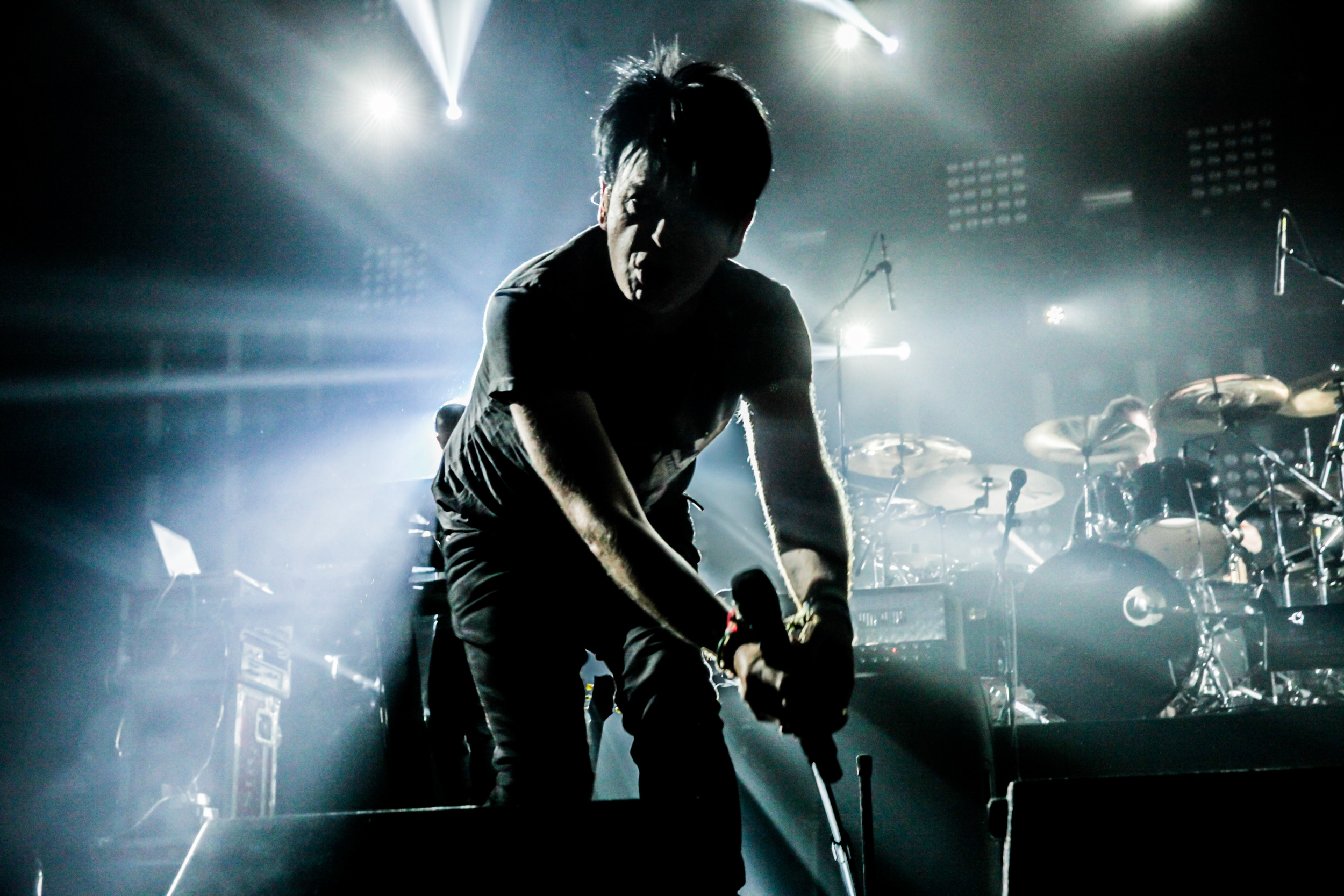
Though Sparks are not for the unacquainted, their legendary status is secure, and not even primarily for the laundry list of artists who found influence in their flamboyant oddness. The question of influence was most deeply explored Saturday night via the pairing of synth legend Gary Numan a few hours before Nine Inch Nails. Numan, the most palpable influence of Reznor, starkly reinvented his sound following the rise of Nine Inch Nails to replicate his love of Reznor’s hard-bitten, industrial palette. The ever-amicable Numan (he was a complete ham at his panel interview) went deep into his brand-new, 20th LP, Splinter (Songs for a Broken Mind), teasing his older work through “Films” and Metals” but almost eschewing Tubeway Army, save for “Down In the Park.” Numan is a charged presence on stage and his aggressive new work is the ideal companion to his black-clad persona, but if there was ever a moment to posit the question, “Are Friends Electric?” this was it.
Conversely, Reznor’s new record Hesitation Marks feels more grown up, the work of a man on the precipice of self-actualization, but ironing out the last few questions of identity. The addition of world-class bass mercenary Pino Palladino’s glacial, fretless groove answers a question that used to be asked more when actual instruments were commonly in play. Who was the best bass player at Mountain Oasis? The guy who has played with Herbie Hancock, D’Angelo, the Who and now Nine Inch Nails.
Even with the overly aggro crowd at NIN in mind, the scarcity of bass at Darkside — electronic wunderkind Nicolas Jaar’s collaboration with guitarist composer Dave Harrington — was one of the festival’s most tense moments. Their first-ever US performance was built around their stunning two-week-old debut album Psychic,easily one of the best records of this year, and Darkside has built a live performance to match its shapeless intensity. Harrington’s taste for seething blues passages results in bars that spit in the face of the best hot players. That so much tension could come from so few licks is contrary to the conventional, dad-rock-obsessed blues fan, and paired with Jaar’s pressurized vocal manipulations, the thunder in the Thomas Wolfe Sunday night didn’t have to peg the meter. When they did finally unleash a heavy, subsonic heartbeat midway through “Freak Go Home,” it was as close to religion as the crowd of devil-horned thralls (thanks Four Loko) would come.
Getting an adequate bass fix at Mountain Oasis wasn’t exactly a challenge, though. Levels at Bassnectar were beyond oppressive, particularly in the very front where confetti cannons regularly blasted the arena. The ongoing appeal remains his titanic LED array, among the most expensive of the weekend, but lovers of pure bass monsters likely found more comfort with Saturday night’s set by the Bug at the Orange Peel. Kevin Martin’s thundering, four-on-the-floor marriage of the grimiest island patois and the purest, most perfect jungle beats felt like being possessed — there was simply no way to remain in control. It comes from somewhere so deep and soulful that it blurs the line between aggro and spiritual. Similarly, many who’ve been waiting 25 years to experience the Orb live were treated to two hours of incessant tribal pounding to close out the last night, where the other most important question of the weekend — “What were the skies like when you were young?” — was not left on the table.
If the composite picture painted by Mountain Oasis speaks to any one truth, it’s that the countless variations of popular electronic music are deeply ingrained in all listening experiences. The bedroom jams of XXYYXX took the club out of the equation entirely, while Disclosure’s eminently stunning performance gives new understanding of the ever-evolving purpose of house music. There was no better visual than the giant, androgynous day-glo face behind the brothers singing along to Sam Smith’s impassioned wail on “Latch,” or London Grammar’s enchantment “Help Me Lose My Mind,” but it also isolated the listeners’ focus on that single songwriting element over the singer-personality dynamic that dominates pop. There was no one singing, and yet there were so many singing (when Jessie Ware wasn’t guest-starring for “Confess to Me”). That element of curiosity-meets-discovery remains integral to this Halloween weekend bash, no matter what it’s called.

SuperJam 2014: The Young & Restless
In practically any other year, the most important item to come from the 2014 102 JAMZ SuperJam would undoubtedly be that Rick Ross’s experience there ended exactly how his 2012 one began — in the temporary custody of Greensboro law enforcement. Sure, his post-show arrest for flouting a scheduled court appearance to answer for his pre-SuperJam 2012 marijuana citation had Greensboro back in TMZ’s lede. Most of the last dozen SuperJams have served as a barometer for which rap cuts will bang from the most trunks tuned to 102 JAMZ for approximately the next three months, and that kind of secondary drama is perfect fodder to fill about 30 minutes of its most glib morning show in the Piedmont.
In practically any other year, the most important item to come from the 2014 102 JAMZ SuperJam would undoubtedly be that Rick Ross’s experience there ended exactly how his 2012 one began — in the temporary custody of Greensboro law enforcement. Sure, his post-show arrest for flouting a scheduled court appearance to answer for his pre-SuperJam 2012 marijuana citation had Greensboro back in TMZ’s lede. Most of the last dozen SuperJams have served as a barometer for which rap cuts will bang from the most trunks tuned to 102 JAMZ for approximately the next three months, and that kind of secondary drama is perfect fodder to fill about 30 minutes of its most glib morning show in the Piedmont.
To 102 JAMZ’s custodial ends, they have been extremely effective in no small part to their role as marshal for the summertime rap playlist. Their burden is to not put the best and brightest hip-hop talent on a stage before a coliseum full of discerning hip-hop lovers, but to work both sides of a causality and engage the widest audience possible: these are the rappers that get the most airplay, therefore these are the rappers who people most want to see. But what if the SuperJam bookings primarily consisted of rappers that hip-hop fans should most want to see? It didn’t make TMZ headlines, but for once, SuperJam’s burden of catching promotional lightning in a bottle was also actually a coup in the artistic sense.
Indeed, this year’s lineup — and it’s never a lineup until it actually happens; see A$AP Rocky’s last-second cancellation last year — was free of the walking ringtones that stacked the lineups of the late 2000s. There were no Fast Life Yungstaz, Party Boyz or Yung Chris like recent years; rappers whose brief stints in relevancy almost seemed like a favor to someone in hindsight. Ca$h Out made an unannounced return as the opening artist — probably as a favor to Yo Gotti — in the same spot he occupied two years earlier. It probably could have been more wisely used as a way to feature a local artist. Greensboro rapper JK the Reaper lamented Greensboro’s preference for big-name rappers in a recent interview in which he also suggested that he was soon to no longer be a Greensboro rapper because of it. Instead, there was the biggest rapper who has yet to transcend these events in Rick Ross and the usual, if imperfect robustness of Yo Gotti at the top, along with genuinely impassioned affairs from Kid Ink and K Camp at the bottom. The middle tier of YG and Young Thug, however, was 40 minutes of unalloyed intrigue.
Maybe the most interesting part of following SuperJam is the pre-lineup speculation that transpires on social media in the run-up. If there’s any doubt that it’s indeed an important cultural event, one only need to check the frequency with which Ty Dolla Sign, Rich Homie Quan or Lil Boosie were speculated to be on the bill on Twitter. Compton upstart YG (or Bompton, if you prefer his pro-Blood vernacular) was among the commonly requested, simply because his outstanding debut My Krazy Life is still just a few months old. Despite having one of the best support networks in hip-hop (including DJ Mustard, whose beats were a part of almost every SuperJam artists’ sets), and rapping about it on “My Hitta”, he cleared his stage almost entirely. He was a rapper throwing it back to the glory days of West Coast hiphop on the East Coast, covering Dr. Dre’s “Still D.R.E.” amidst reminding everyone that he has more party hits on the radio than anyone right now.
Rarely would you see anyone rooting for a Young thug set, however. And it’s not because the weirdo Atlanta product isn’t beloved to a unreasonable degree; it’s because he just doesn’t fit the SuperJam “type”, which is to say that in reality he doesn’t fit any type. He is sui generis, a rapper who goes against every putative truth in the ultramasculine, testosterone-fueled hip-hop world.
102 morning show co-host B-Daht’s recent self-inflicted grievance over the Winston- Salem State homecoming king candidate’s choice to run in drag looks especially daft in hindsight, because no one with any sense is making hay out of the gender identity matters accompanying Young Thug. The name, as generic as it sounds, is almost meant to be construed as a send-up of rap names, a la Pimp Trick Gangsta Clique on OutKast’s “Return of the G” skit. He paints his nails, calls his best guy friends “love” and wears dresses just because. In the case, the impossibly gangly Young Thug came on stage wearing one of the oddest pant creations in rap, a Day-Glo calico concept as left-field as the man wearing them.
It was a shame that he was relegated to a 15-minute slot, because there’s no more hypnotic presence in hip-hop, or any genre, right now. He has, in the words of rap critic David Drake, that “mysterious quality commonly referred to as it”; and what “it” was in this instance was the ability to transcend the feral vocal tactility heard on his heavily post-processed records, offer up a more human-sounding presentation of songs like the darkly mesmerizing “Danny Glover” or the silly, but insanely clever Picacho and still turn a crowd on its head. He brought along his close associate and favorite producer London On the Track to serve as a hype man, but he wasn’t needed; it was impossible to avert ones eyes from this strange creature.
At the lower rungs, performances by K Camp and Kid Ink were impassioned affairs with more than one big-time track at their centers. DJ Ern spun K Camp’s neo-snap hit “Cut Her Off” as pre-show house music just minutes before the Atlanta-based rapper was to go on as if by reflex, and the audience’s reaction was still enormous when the emcee dropped the genuine article off of his two-month-old debut EP. His set wasn’t without a bit of humor, either. He asked anyone who had more than twenty dollars in their pockets to make some noise, an unconscious throwback to the days of lower bars at SuperJam The conscious reminder, however, was a surprise appearance by Lil Cousin Terio, the morbidly obese, dancing seven-year-old of Internet “Ooh Kill ‘Em” fame, still being exploited by his disgusting family and ethically-unburdened club and tour promoters, and being set on an irreversible path down the gutter. The charm of his early Vine videos wore off long ago, and as sad as it is to say, his life will never be better than it is right now because of the decisions made by others. Ice JJ Fish, another ridiculous novelty of Internet fame, was scheduled to appear off the books, but didn’t show.
Before Ross was scooped by police waiting off-stage, he didn't mind veering off script despite having a relatively fresh record to promote. There was surprising deference in his voice as he paid his respects to the recently departed Bobby Womack, dropping the beat and a verse from “Oil Money Gang”, a year-old track buoyed by the sweetness of Womack’s “That’s the Way I Feel About Ya”. A lot of the nearly 10,000 people in attendance likely not only learned of the passing of Bobby Womack earlier in the day from Rick Ross, but given the young-leaning audience that SuperJam has taken on, many likely learned who Bobby Womack was, period. It was a small victory, but not the only one. !
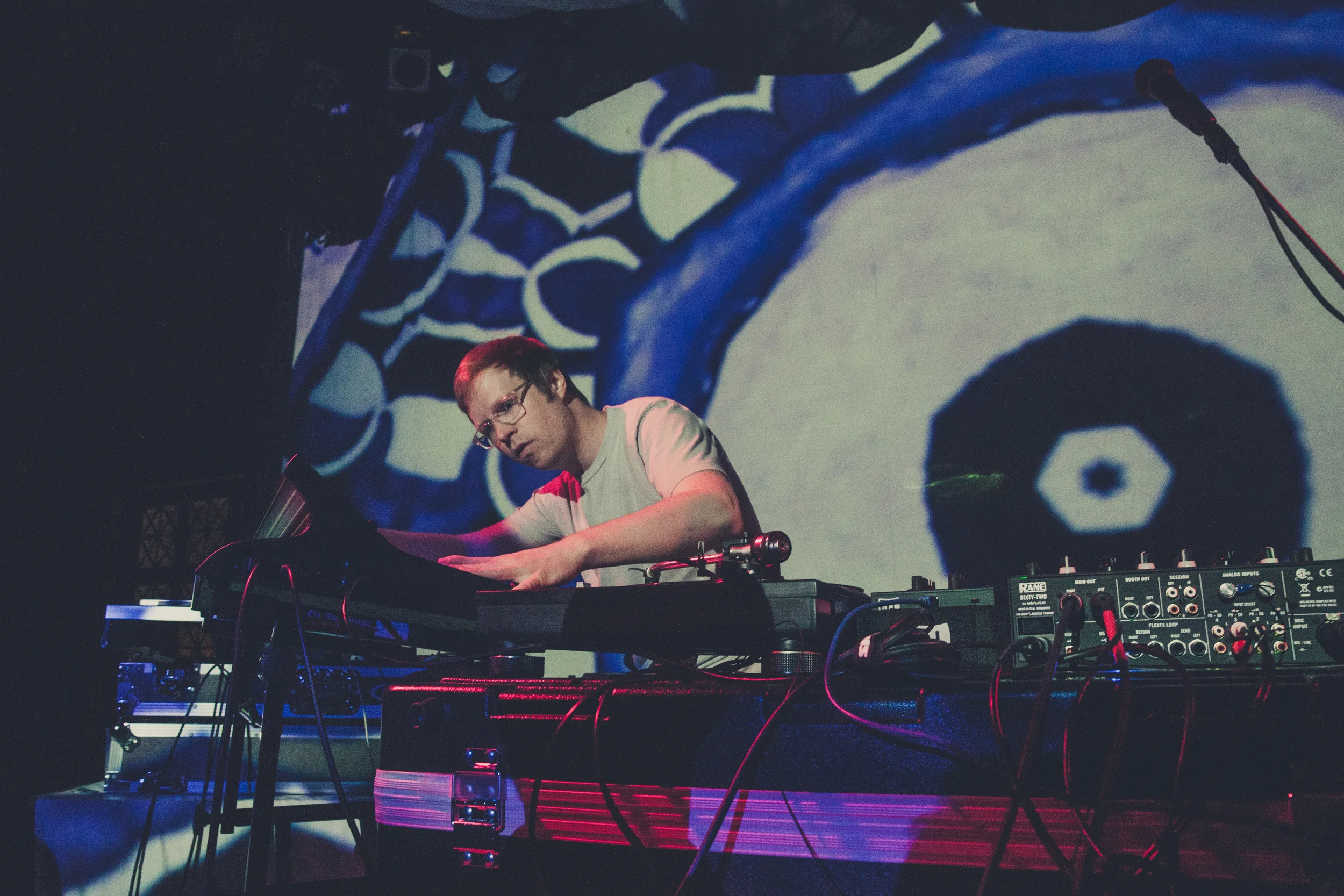
Dance From Above 1.0 Creates a New Standard for Success at the Crown
The first three months and change in earnest at the Crown, the recently renovated and nobly repurposed third floor studio-turned-concert space at the Carolina Theatre, has been an exploration of boundaries of sorts. Most of the shows presented early on by the Carolina Theatre’s in-house promotions team have angled previously tested waters, drawing respectable crowds to check out familiar names in subdued, even spartan new surroundings. It served as the venue for Jack Carter & the Armory to release an album of rowdy rock-and-roll cabaret called Billy the Kid, soaring pop-punk purveyors Unifier to rock with national upstarts Somos, and Americana and Africana to convene when Bruce Piephoff and Diali Cissokho & Kaira Ba shared a bill just last month. It was inevitable that the measured success of those events would open the door to grander visions for the space, however, and it was realized last Thursday with “Dance from Above 1.0”.
The first three months and change in earnest at the Crown, the recently renovated and nobly repurposed third floor studio-turned-concert space at the Carolina Theatre, has been an exploration of boundaries of sorts. Most of the shows presented early on by the Carolina Theatre’s in-house promotions team have angled previously tested waters, drawing respectable crowds to check out familiar names in subdued, even spartan new surroundings. It served as the venue for Jack Carter & the Armory to release an album of rowdy rock-and-roll cabaret called Billy the Kid, soaring pop-punk purveyors Unifier to rock with national upstarts Somos, and Americana and Africana to convene when Bruce Piephoff and Diali Cissokho & Kaira Ba shared a bill just last month. It was inevitable that the measured success of those events would open the door to grander visions for the space, however, and it was realized last Thursday with “Dance from Above 1.0”.
It was the first in what is intended to ultimately be a monthly series of dance parties favoring progressive electronic music talent over playlist DJs, like local beat whisperer darklove. and Charlotte deep-house wizard Collectr. The bare room exploded with color from a full visual array created by videographer Adam Graetz and presented by Brandon Warren, and even more stunning production than the show’s headliner Marley Carroll saw when he closed out the final night of the recent Moogfest at a Hopscotch showcase.
The Asheville-based Carroll is a guy with a strong case for not only being among North Carolina’s preeminent dance music producers, but all-around musicians, period. He’s part of a wave of progressively-minded electronic artists like Robert DeLong, Classixx and fellow North Carolinian-turned-Berliner Machinedrum who see equal value in the visual cause and the visceral effect of making dance music. He’s both a classically-trained percussionist and a champion turntablist who deploys the full spectrum of his abilities toward a singular goal — moving bodies. Thursday night, the tactile element to watching him create music from his superlative 2013 record Sings was just as satisfying as the natural outcome of his playful rhythmic expressions.
Outside the Carolina Theatre, the atypical thump of bass emanated down to street level, but inside, Carroll was creating a symphony of downtempo, Afropop-centric groove on Technics, a mixer, microphone and an array of esoteric hardware. His set opened with the impulsive “First Thought, Best Thought” and slyly transitioned into the future-garage angle that British producer Little People took on his recent remix. Carroll offered his own perspective on some of his peers and influences, turning in a chilled-out remix of Asheville shoegazers Sonmi’s “Future 26” and a shimmery deconstruction of the Polish Ambassador’s ultra-funky “Oh Love”.
His original compositions concluded with “Speed Reader”, the melodic opus that unites the stylistically far-reaching Sings under a single, gentle anthem. Part of his audience broke from their sweaty bacchanal just long enough to purr along with Carroll’s soft intonations, which even seemed to take him by surprise. Likewise, Carroll’s audience might have been thrown when he broke into a DJ set of African electronica. His left-field playlist included beats from the Owiny Sigoma Band, one of the finest discoveries of Acid Jazz founder and cosmopolitan crate digger Gilles Peterson, and a remix from the Knife’s Olof Dreijer of a track by child soldier-turned political activist Emmanul Jal.
By just about any conventional measure, the show was an incisive success. That audience, has it happened, set the door record for attendance at a Crown show — against less than a dozen shows, but a record nonetheless — at 205 paid entries, along with bringing in more (but as of yet undisclosed) bar income than any other Crown show to date. Yet, the independent promoters who brought the show together still came out on the losing end financially. The Carolina Theatre took the reservation fee, the bar and an additional 15 percent off the door off before the talent was paid, which at five dollars admission, was intended to dissuade barriers to entry for the new series, according to Daniel Olsen of promoter Jazzy Joel Productions.
While there are obvious safety nets built into in-house promotions at the Crown — it’s easier to sell milk when you own the barn, in this case — their current structure seems presents independent promoters with dire scenarios for trying to keep admission fees down while also diversifying the space’s offerings. Olsen said that much of the logistical support that lead to the show’s success was provided pro bono in order to get the series off the ground; when decorum prescribes payment for all services rendered in the future, a cutting edge party could quickly become bleeding edge.


Quisque iaculis facilisis lacinia. Mauris euismod pellentesque tellus sit amet mollis.